17.1% Land Share: Why Fiji Prioritizes Agri-Science
"The soil is the foundation of the nation, but how we fund its science determines our future."
Fiji is currently navigating a complex transition where traditional land use meets modern scientific necessity. As the government recalibrates its national R&D strategy, the heavy tilt toward agricultural research is reshaping the country's intellectual and economic landscape.
Key Takeaways: * The Fijian government maintains a significant concentration of R&D spending within the agricultural sector to secure food sovereignty.
* This focus creates a direct budgetary relationship between land-based research and the available funds for broader educational and scientific pursuits. * National resource management is defined by a specific ratio of land use that necessitates targeted, high-impact investment.
Why is agriculture the core focus of R&D?
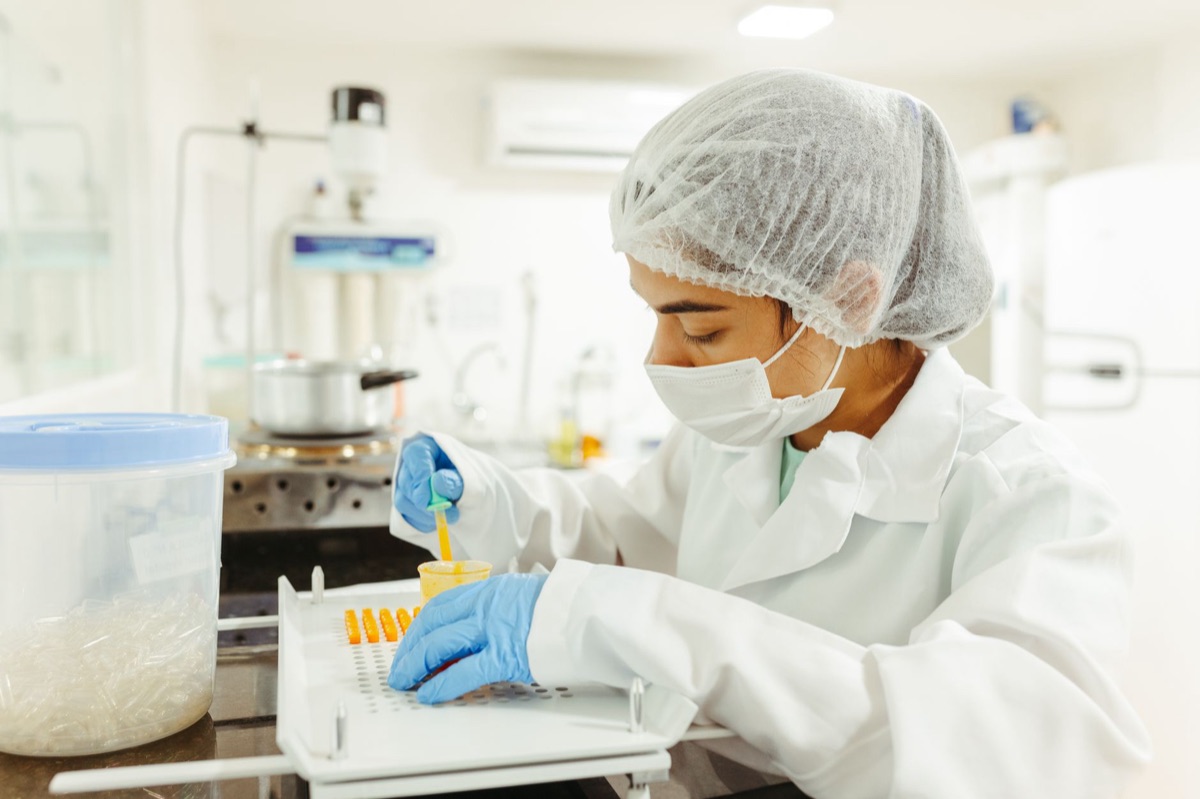
A researcher in Suva sits at a wooden desk at 9:00 AM, staring at a spreadsheet of budget allocations that seems to favor one specific sector over all others. The sunlight through the window hits a tray of soil samples, a reminder of where the nation's primary economic interests lie.
The current concentration of government R&D budget allocation is heavily weighted toward agricultural needs. In Fiji, the ability to produce food and manage land is not just a matter of commerce; it is a matter of national stability.
Because the economy relies so heavily on the successful management of natural resources, the government prioritizes research that yields immediate, tangible results in crop yield, pest management, and soil health.
This strategic focus is driven by the sheer scale of land utilization. According to World Bank data, Fiji recorded an agricultural land share of 17.1% in 2023. This significant portion of the country's geography necessitates a specialized R&D approach that ensures these lands remain productive.
While this focus provides a safety net for the economy, it also creates a budgetary environment where other scientific disciplines must compete for a limited pool of resources.
The prioritization of agriculture ensures that the primary engine of the economy is well-maintained, but it also sets a high bar for any other sector attempting to secure funding. But how does this spending affect the rest of the academic world?
How does agricultural investment impact education and research?
A graduate student walks through the university courtyard at noon, wondering why her department's funding feels so much thinner than the agricultural science wing across the campus.
There is a direct correlation between agricultural R&D spending and the allocation of funds to broader education and research. In many developing economies, R&D is not a growing pie but a fixed one.
When the government decides that food security is the highest priority, the funds required for high-tech agricultural research often come at the expense of pure science or social research.
This concentration can lead to a "silo effect," where non-agricultural research streams struggle to find footing.
To understand how this compares to other sectors, we can look at health research. According to the Fijian National Bureau of Statistics, government expenditure on health research has remained fairly constant, at about 5% of total government research spending.
This stability in health spending provides a baseline, but it also highlights how much more volatile and subject to competition the agricultural and general education budgets can be.
The challenge lies in ensuring that the focus on agriculture does not lead to a permanent deficit in other vital areas of intellectual growth. However, to understand the scale of the challenge, we must look at the physical boundaries of the nation itself.
What is the reality of Fiji’s economic and resource footprint?
A coastal surveyor stands on a ridge at sunrise, looking out over a vast expanse of land that transitions from lush greenery to the deep blue of the Pacific.
Understanding Fiji's R&D strategy requires a look at its physical reality. The nation is an archipelago with a unique geographic profile that dictates its economic possibilities. Fiji covers a total area of some 194,000 square kilometres (75,000 sq mi), of which around 10% is land.
This limited land mass makes the management of every square meter critical to national productivity. Because the land area is relatively small compared to the surrounding ocean, the intensity of land use is high. The 17.1% of land dedicated to agriculture represents a vital lifeline.
Managing this land requires sophisticated R&D in irrigation, soil science, and climate-resilient farming techniques.
The economic footprint of the country is essentially tied to how efficiently this land can be utilized to support the population and generate export revenue. The relationship between the limited land area and the high demand for productivity is the primary driver of the current R&D strategy.
But how do we know if this strategy is actually working?

How do we measure national development success?
A customs official stamps a document at a busy terminal, marking the arrival of a group of travelers during a period of fluctuating global mobility.
To evaluate the success of Fiji's economic and R&D strategies, we must look at historical benchmarks of national activity. Economic health is often measured by the movement of people and the exchange of goods.
In a year of global disruption, such as 2020, Fiji recorded international tourist arrivals of 168,000, according to World Bank data.
While tourism is a major pillar of the economy, it is often subject to global volatility, making the agricultural sector an essential "stabilizer." The R&D focus on agriculture acts as a hedge against the fluctuations seen in the tourism sector.
By building a robust, science-backed agricultural base, the government ensures that the economy has a foundation that is not solely dependent on international travel trends.
These benchmarks show that while tourism brings in vital revenue, the internal stability of the nation relies on the successful management of its own resources through targeted R&D. This leads us to the most difficult question of all: what comes next?
Diversification vs. Deepening: What is the path forward?
A policymaker sits in a quiet meeting room at dusk, weighing the pros and cons of a new multi-million dollar investment plan that could either expand or narrow the nation's scientific reach.
As Fiji looks toward the future, a fundamental question emerges: should the nation continue to deepen its focus on agriculture, or should it begin to diversify its R&D spending into other high-tech sectors?
Maintaining a deep focus on agriculture offers the benefit of specialized expertise and food security, but it risks leaving the country behind in the global digital and technological race.
Diversification could lead to growth in marine biology, renewable energy, and telecommunications, but it requires a significant shift in how the government allocates its current budget.
A strategic recommendation would be to use the surplus generated by a successful, high-tech agricultural sector to fund a gradual transition into broader scientific research.
This "step-ladder" approach allows the economy to grow through its current strengths while building the infrastructure for a more diverse future. The path forward requires a delicate balance between securing the present through agriculture and investing in the future through diversification.
A Strategic Roadmap for Resource Allocation
To navigate this transition, policymakers can follow a structured approach to balance immediate needs with long-term growth:
- Stabilize the Core: Prioritize R&D in soil health and irrigation to maximize the current 17.1% agricultural land share.
- Generate Surplus: Use the economic returns from high-yield agriculture to create a dedicated "Innovation Fund."
- Incremental Diversification: Allocate a portion of the Innovation Fund to emerging sectors like marine biology and renewable energy.
- Infrastructure Integration: Invest in digital tools that can be used by both agricultural researchers and new scientific disciplines.
- Evaluate and Rebalance: Conduct biennial reviews of spending to ensure no single sector permanently starves the others of resources.
Limitations and Trade-offs
It is important to note that this strategy is not a universal solution. The heavy focus on agriculture is a response to specific geographic constraints and current economic realities. In nations with vast land masses or different primary industries, this level of concentration would be unnecessary.
Furthermore, the transition from an agriculture-centric economy to a diversified one is slow and carries the risk of temporary economic instability if the transition is rushed.
#








Comments 0